
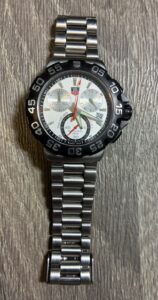
TAG Heuer CAH1111 Formula 1 Watch.
The TAG Heuer CAH1111 Formula 1 is a fantastic entry point into the world of luxury sport watches. While some purists may prefer a mechanical
In the context of firearms legislation, an airgun is defined as a weapon that utilizes compressed air or carbon dioxide to discharge a projectile through a barrel. However, it’s crucial to note that not all airguns fall under the category of “firearms.”
Section 57 of the Firearms Act 1968 specifies a firearm as a lethal barrelled weapon capable of discharging shots, bullets, or other projectiles. To be classified as a firearm, an object must meet certain criteria: it must be a weapon, possess a barrel for projectile discharge, and the impact of the projectile on the target must be potentially lethal. Lethality, in this context, refers to the ability to cause more than trivial injuries, with trivial injuries defined as superficial damage like bruising. Essentially, if a gun’s pellet can penetrate the skin, the gun is considered a firearm.
Expert advice from the Forensic Science Service indicates that the minimum power level for causing a penetrating injury is around one foot pound, roughly equivalent to 1.35 joules. Some airguns, particularly those referred to as “airsoft” guns, have muzzle energies well below this level—often around half a foot pound or less. Consequently, these guns do not meet the definition of firearms and are not subject to the Firearms Act.
At a higher power level are low-powered airguns, including pistols with muzzle energies below six foot pounds and rifles with muzzle energies ranging from three-quarters of a foot pound to 12 foot pounds. While these weapons do not require a police-issued firearm certificate, they are considered firearms due to their capacity to cause penetrating wounds.
Moving up the scale, higher-powered airguns commonly used for hunting small game or vermin control must be registered on a firearm certificate, similar to other firearms regulated by section 1 of the Firearms Act. This places high-powered airguns in the same category as potent deer-stalking rifles. High-powered air pistols, those with muzzle energies exceeding six foot pounds, are treated as conventional handguns and are subject to corresponding restrictions.
LEGISLATION
Although a firearm certificate is not necessary for purchasing and owning low-powered airguns, they are still considered firearms and fall under the jurisdiction of the Firearms Acts. Various offenses related to firearms apply to airguns, particularly concerning age limits, carrying, discharging, and involvement in other criminal activities.
For instance, it is illegal to provide an airgun to an individual under 14 or sell one to someone under 17. Possessing a loaded airgun in a public place, firing it within 50 feet of a public road, or trespassing with an airgun are all offenses. Possessing an airgun with the intent to commit a crime or endanger life or property is a serious offense, with penalties ranging from heavy fines for minor offenses to life imprisonment for more severe crimes.
In addition to these offenses, owning a high-powered air rifle without a firearm certificate is also illegal. Before issuing a certificate, the police must ensure that the applicant is a responsible individual, capable of securely storing the gun when not in use, and has a valid reason for possessing it—commonly accepted reasons include participation in recognized target shooting disciplines or the need for vermin control.
STATISTICS
Over the years, there has been an increase in reported airgun-related incidents to the police. Between 1987 and 1997, the annual total of notifiable offenses rose from 5,172 to 7,506. However, during the same period, the incidence of injuries caused by airgun misuse steadily declined. In 1997, there were 33% fewer injuries compared to 1987, with 1,194 reported cases. A significant majority of these incidents (over 75%) involved criminal damage valued at more than £20.
Stats on airgun and shotgun offenses across different police force areas, with forces ranked based on urban/rural classification. The data suggests a correlation between urbanization and rates of shotgun misuse, but there is less consistency in the case of air weapons, with variations between forces and recording practices.
LEGITIMATE AIRGUN USERS
It is essential to acknowledge that the majority of airgun enthusiasts are responsible target shooters who engage in their sport with discipline. Airgun shooting is even recognized as an Olympic event, where British competitors traditionally excel. Many shooting clubs facilitate airgun ranges for proper training and supervision of young and novice shooters, emphasizing safe and responsible gun handling.
IMPROPER USE OF AIRGUNS
Despite responsible use, there remains a minority, mostly comprising young individuals, who misuse airguns, sometimes in a dangerous manner. Existing offenses cover a range of misuses, but considering potential inadequacies, it is worth exploring additional controls.
The Crime and Disorder Act introduced measures to reform the youth justice system, indirectly impacting airgun offenses. These measures include a Final Warning system, faster processing of young offenders, and Child Protection Orders to keep young children off the streets late at night.
Possible Further Controls:
Addressing the complexities surrounding the control of airguns requires a nuanced and balanced approach. Each proposed measure—prohibition, certification, or age restrictions—presents unique advantages and challenges, necessitating careful consideration of their practical implications, resource demands, and overall impact on public safety and responsible airgun ownership.
The outright prohibition of airguns raises significant concerns due to its potential impact on legitimate uses and the difficulty of enforcing such a ban. The associated costs, both in terms of compensation for owners and the strain on law enforcement resources, could be substantial. Additionally, there’s the risk of individuals inadvertently violating the law, and the ban might be seen as disproportionate given the overwhelming majority of responsible airgun owners.
Implementing a certification regime for low-powered airguns may seem attractive in terms of better control and awareness of the total number of such weapons. However, the sheer volume of existing airguns, estimated to be around four million, poses a significant challenge for law enforcement, already managing various firearm certificates. The impact on reducing vandalism and injuries might be limited, as other readily available weapons outside firearm legislation could be used for similar purposes.
Rationalizing and raising age limits for unsupervised access to airguns, possibly to 18 years old, could target the demographic most likely to misuse these weapons. This approach is relatively straightforward to implement and may be more economical in terms of police resources. However, it does not account for alternative weapons like small crossbows and wrist-braced catapults, which can cause similar harm and are not covered by existing firearms legislation.
An alternative strategy could involve educational initiatives, aiming to raise awareness about the dangers posed by airguns and promoting responsible use. Providing informational materials, such as leaflets, could be part of a comprehensive public awareness campaign targeting both parents and airgun enthusiasts. Encouraging the safe use of airguns and emphasizing the penalties for misuse may help foster a culture of responsibility and reduce the allure of irresponsible behavior.
Moreover, a campaign encouraging individuals to voluntarily surrender unwanted airguns for proper disposal by law enforcement could be incorporated into educational efforts. By focusing on responsible use rather than discouraging use altogether, this approach aims to mitigate the glamorization of misusing airguns.
Ultimately, the effectiveness of any control measures will depend on their careful implementation, ongoing evaluation, and adaptability to evolving circumstances. The Firearms Consultative Committee’s continued consideration of airgun controls, as part of its work program, reflects an ongoing commitment to refining legislation based on emerging insights and challenges.
In summary, a comprehensive strategy that combines elements of education, public awareness, and targeted control measures may offer a more nuanced and effective approach to address the challenges associated with airgun ownership and misuse. Striking a balance between public safety and the legitimate use of airguns is essential for creating a regulatory framework that is both practical and fair.
The TAG Heuer CAH1111 Formula 1 is a fantastic entry point into the world of luxury sport watches. While some purists may prefer a mechanical
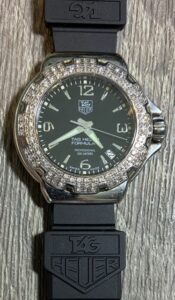
The TAG Heuer WAC1214 Formula 1 Diamond Watch strikes a perfect balance between a high-performance sports watch and a glamorous piece of jewelry. It’s a

The TAG Heuer 384.513/1 is a fascinating and important watch. It’s a reminder of a pivotal time in horological history and a testament to TAG