How to choose the right AirGun Caliber for your game in the UK.
How to choose the right AirGun Caliber for your game in the UK. Summary
How to choose the right AirGun Caliber for your game in the UK. Images
How to choose the right AirGun Caliber for your game in the UK. Description
Choosing the right air gun caliber for your game in the UK involves considering several factors, including the type of game you’ll be hunting, local regulations, shooting distance, and personal preferences. In the UK, air gun laws are strict, and the maximum legal limit for the power of an air rifle is 12 ft-lbs (foot-pounds) of energy. Here’s a step-by-step guide to help you make the right decision:
Understand the UK regulations: Familiarize yourself with the UK’s air gun laws and regulations. Make sure you are aware of the legal requirements, including the maximum power limits and any specific rules for hunting certain game species.
Determine the type of game: Decide on the primary type of game you’ll be hunting. Air guns are commonly used for small game hunting, such as rabbits, squirrels, and pigeons. Larger calibers might be required for larger game, but remember the 12 ft-lbs energy limit.
Consider shooting distance: Determine the typical shooting distance you’ll encounter while hunting. Smaller calibers tend to have flatter trajectories, making them more suitable for shorter distances, while larger calibers may be better for longer ranges.
Evaluate calibers available: The most common air gun calibers are .177 (4.5mm) and .22 (5.5mm) in the UK. Occasionally, you may find .20 (5mm) and .25 (6.35mm) calibers. Each caliber has its advantages and disadvantages.
.177 Caliber: Offers higher velocity, flatter trajectory, and less recoil. It’s better for shooting at longer ranges and precision shooting but might lack stopping power for larger game.
.22 Caliber: Provides more knockdown power and a heavier pellet, which is advantageous for hunting small game at closer ranges. The trajectory is a bit more arched compared to .177.
.20 and .25 Calibers: These are less common but offer a balance between the other two calibers, providing moderate velocity and reasonable stopping power.
Personal preference and accuracy: Your shooting skills and personal preference also play a role in the caliber choice. Some shooters prefer the flatter trajectory of .177, while others prefer the additional stopping power of .22. Choose the caliber that you can shoot accurately and consistently.
Ammunition availability: Consider the availability of pellets in your chosen caliber. It’s essential to have access to a variety of high-quality pellets for optimal performance.
Test and compare: If possible, test various air gun calibers before making your final decision. Shooting different calibers will give you a better idea of how they perform, and you can choose the one that feels most comfortable and effective for your intended game.
Remember, ethical hunting practices and humane treatment of animals should always be a priority. Always follow the law, practice responsible shooting, and ensure you have the necessary skills to make clean and accurate shots.
Shot placement is crucial: Regardless of the caliber you choose, shot placement is of utmost importance. Accuracy is key to ensure humane kills and avoid causing unnecessary suffering to the game. Practice regularly at different distances and shooting positions to improve your marksmanship.
Consider the noise level: Air guns are generally quieter than firearms, but there can still be some variation in noise level between different calibers. If you plan to do pest control in urban or noise-sensitive areas, you might want to choose a caliber that produces less noise to avoid disturbing neighbors.
Energy and distance correlation: Remember that energy decreases as the pellet travels further. If you’re shooting at longer ranges, the caliber with more initial energy might be a better choice to maintain sufficient knockdown power.
Penetration and expansion: Different calibers have varying abilities to penetrate through dense foliage or thick hides. Additionally, consider whether the pellet type you use (hollow points, domed, pointed, etc.) provides adequate expansion and energy transfer to the target.
Weight of the rifle: The caliber can also influence the weight of the air rifle. Generally, .177 caliber rifles might be lighter, while .22 caliber rifles could be slightly heavier. Choose a rifle weight that you can comfortably carry and handle during extended hunting trips.
Consider multi-caliber options: Some air guns come with interchangeable barrels or caliber conversion kits. These multi-caliber options can be a good choice if you want the versatility to switch between calibers for different hunting scenarios.
Seek expert advice: If you’re uncertain about which caliber to choose, don’t hesitate to seek advice from experienced shooters, hunters, or air gun enthusiasts. They can provide valuable insights based on their practical experiences.
Budget considerations: Finally, factor in the cost of ammunition and accessories for your chosen caliber. Some calibers may be more readily available and affordable than others, so take this into account when making your decision.
In summary, choosing the right air gun caliber for your game in the UK involves a combination of legal considerations, game requirements, personal preferences, and shooting skills. Take the time to research and test different options, and prioritize responsible and ethical hunting practices. Remember to always follow the law and prioritize safety while enjoying your air gun shooting experience.
Maintenance and barrel life: Different calibers might have varying effects on the longevity of your air gun’s barrel. Some calibers might require more frequent cleaning or have a shorter barrel life due to the higher pressures generated. Consider the maintenance requirements and factor this into your decision.
Local availability and support: Check the availability of air gun dealers or shops in your area. It’s beneficial to have local support for repairs, maintenance, and to purchase accessories and ammunition for your chosen caliber.
Consider the intended use: Besides hunting, consider if you plan to use your air gun for other purposes, such as target shooting, plinking, or pest control. The intended use can influence the caliber choice, as some calibers are more suitable for specific activities.
Personal shooting preferences: Your shooting style and preferences can also guide your decision. Some shooters might prefer the challenge of precision shooting with a .177 caliber, while others might enjoy the added knockdown power of a .22 caliber.
Legal and ethical considerations: As an ethical hunter, it’s essential to select a caliber that matches the game you’ll be hunting and ensures quick, humane kills. Avoid using an overpowered caliber that might be excessive for your target species.
Age and physical ability: If the air gun is for a younger or less physically strong shooter, a lighter caliber might be more manageable and enjoyable to shoot.
Experiment and adapt: Don’t be afraid to experiment and try different calibers over time. As you gain experience, your preferences and shooting skills might change, and you may find a different caliber suits you better.
Stay informed: Keep up-to-date with the latest advancements in air gun technology, as new calibers or pellet designs may become available that could impact your decision.
In conclusion, choosing the right air gun caliber for your game in the UK involves a combination of legal compliance, game suitability, personal preferences, and practical considerations. Take the time to research, seek advice from experienced shooters, and try out different calibers to make an informed decision. Remember to prioritize safety, ethical hunting practices, and respect for the environment and the animals you encounter. Happy shooting and hunting!
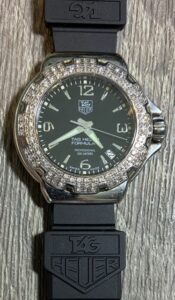
The TAG Heuer WAC1214 Formula 1 Diamond Watch strikes a perfect balance between a high-performance sports watch and a glamorous piece of jewelry. It’s a