
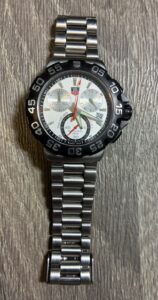
TAG Heuer CAH1111 Formula 1 Watch.
The TAG Heuer CAH1111 Formula 1 is a fantastic entry point into the world of luxury sport watches. While some purists may prefer a mechanical
A blowback airgun is a type of airgun that simulates the recoil action of a real firearm. It is designed to replicate the “blowback” effect that occurs when a bullet is fired from a gun, where the force of the expanding gas propels the bullet forward and simultaneously causes the gun’s slide or bolt to move backward.
In a blowback airgun, this effect is achieved by utilizing a portion of the compressed gas (usually CO2 or sometimes compressed air) used to propel the pellet or BB (projectile) out of the barrel to also move the gun’s slide or bolt backward against a spring. As the pellet exits the barrel, the slide/bolt moves backward, creating a sense of recoil that mimics the feel of shooting a real firearm.
This realistic action enhances the shooting experience for enthusiasts and adds an element of authenticity to the airgun. Blowback airguns are popular among recreational shooters, training purposes, and those who enjoy the sensation of shooting a firearm without the loud noise, strong recoil, and high cost associated with real guns. It’s important to note that although blowback airguns have a realistic action, they are not firearms and should be treated with the same level of safety and responsibility as any other airgun.
Blowback airguns come in various styles, including pistols and rifles. The blowback action is often visible on the slide or bolt, which moves back and forth with each shot. This movement also adds an element of realism to the shooting experience, making it more engaging for users.
One of the advantages of blowback airguns is that they can be an excellent training tool for individuals who are learning firearm handling and shooting techniques. The realistic action and recoil simulation can help shooters practice their grip, aim, and trigger control, translating some of these skills to real firearms if they decide to transition to using them in the future.
Moreover, blowback airguns are typically semi-automatic, meaning they can fire multiple shots without manually cocking the gun between each shot. This feature can make them more enjoyable for target shooting and plinking activities.
However, it’s essential to note that the blowback action does consume more of the compressed gas, which can result in reduced overall shot count per gas cartridge or canister. Additionally, the increased mechanical complexity in blowback airguns can lead to slightly higher maintenance requirements compared to non-blowback models.
When using a blowback airgun, it is crucial to follow proper safety guidelines, treat it as if it were a real firearm, and never point it at anything you don’t intend to shoot. Proper eye protection is also recommended for all shooting activities, whether with airguns or firearms.
As with any airgun purchase, it’s important to check and comply with local laws and regulations, as some jurisdictions may have specific restrictions on airgun ownership, especially those that closely resemble real firearms.
In summary, blowback airguns offer a more realistic shooting experience by simulating the recoil action of real firearms. They are popular among enthusiasts and can be valuable for training purposes, provided they are used responsibly and safely. Always prioritize safety, follow the manufacturer’s guidelines, and enjoy shooting in a controlled and legal environment.
Blowback airguns are available in a wide range of power levels, from low-powered options suitable for plinking and backyard target shooting to higher-powered models capable of accurate shooting at greater distances. The power level is often measured in feet per second (fps) or meters per second (m/s) and can vary depending on the caliber and design of the airgun.
Common calibers for blowback airguns include .177 (4.5mm) and .22 (5.5mm), though other calibers can be found as well. The .177 caliber is typically favored for its higher velocity and flatter trajectory, making it well-suited for target shooting. On the other hand, the .22 caliber generally delivers more energy and is preferred for pest control and small game hunting.
Blowback airguns may use different methods to load the projectiles, including break-barrel, bolt-action, and semi-automatic mechanisms. Each has its advantages and considerations, so it’s essential to choose a loading mechanism that aligns with your shooting preferences and intended use.
When using blowback airguns, it’s crucial to select appropriate ammunition, whether steel BBs or lead pellets, as using improper projectiles can damage the gun or reduce its accuracy. Always refer to the manufacturer’s recommendations and guidelines for ammunition selection and usage.
Like any airgun, blowback models require regular maintenance to ensure proper functioning and longevity. Cleaning the barrel, lubricating moving parts, and storing the airgun properly are essential steps to keep it in top condition.
As technology advances, blowback airguns continue to improve in terms of realism, performance, and efficiency. Some models may include additional features such as adjustable sights, accessory rails for mounting optics or lights, and ambidextrous controls to cater to different shooters’ preferences.
In conclusion, blowback airguns offer an exciting and immersive shooting experience that replicates some aspects of firing a real firearm. They can be valuable tools for training and recreation, allowing enthusiasts to enjoy shooting without the expense and noise associated with traditional firearms. However, as with any shooting activity, safety should always be the top priority, and users should familiarize themselves with the specific operation and safety guidelines of their blowback airgun model.
https://www.replicaairguns.com/posts/2014/3/6/blowback-versus-non-blowback-airgun-comparison.html
The TAG Heuer CAH1111 Formula 1 is a fantastic entry point into the world of luxury sport watches. While some purists may prefer a mechanical
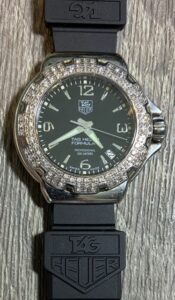
The TAG Heuer WAC1214 Formula 1 Diamond Watch strikes a perfect balance between a high-performance sports watch and a glamorous piece of jewelry. It’s a
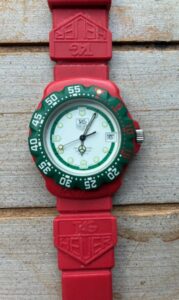
The TAG Heuer 384.513/1 is a fascinating and important watch. It’s a reminder of a pivotal time in horological history and a testament to TAG