There are several types of airguns available for purchase. These airguns can be broadly categorized as follows:
Spring-Piston Airguns: These airguns use a coiled spring and a piston to compress air. When the trigger is pulled, the spring is released, causing the piston to push air into the barrel and propel the pellet or BB.
CO2 Airguns: CO2 airguns use small CO2 cartridges as a power source. When the trigger is pulled, the CO2 is released, expanding and propelling the projectile.
Pneumatic Airguns: Pneumatic airguns use pre-compressed air as their power source. They can be single-stroke or multi-stroke, depending on the number of pumping strokes required to charge the air reservoir.
PCP (Pre-Charged Pneumatic) Airguns: PCP airguns are high-powered airguns that use a separate air reservoir, which is charged using a high-pressure pump or a scuba tank. The compressed air is then released to propel the projectile.
Gas Piston Airguns: Similar to spring-piston airguns, but instead of a coiled spring, they use a gas-filled piston to compress air.
Variable Pump Airguns: These airguns have a pump lever that allows you to control the amount of air compression, providing variable power levels.
Break-Barrel Airguns: These airguns have a barrel that pivots downward to cock the spring or gas piston, and then it is snapped back into place for firing.
Underlever Airguns: Similar to break-barrel airguns, but they have a lever located under the barrel for cocking.
Sidelever Airguns: These airguns have a lever located on the side of the gun for cocking.
Bolt-Action Airguns: Bolt-action airguns have a bolt mechanism that needs to be manually operated to cock the gun and load the projectile.
It’s important to note that airgun regulations and available types may vary depending on your country or region. Before purchasing any airgun, make sure to familiarize yourself with the local laws and regulations governing their ownership and use. Additionally, safety measures should always be taken when handling any type of firearm, including airguns. Always follow the manufacturer’s guidelines and use appropriate safety equipment.
Multi-Shot Airguns: These airguns have magazines or rotary cylinders that allow you to load multiple pellets or BBs at once, enabling faster follow-up shots.
Single-Shot Airguns: As the name suggests, single-shot airguns can only fire one pellet or BB at a time and require manual reloading after each shot.
Full-Auto Airguns: Some airguns are designed to fire in full-auto mode, allowing for rapid firing of multiple projectiles with a single trigger pull. These are often powered by CO2 cartridges and are popular for recreational plinking.
Target Airguns: These airguns are designed with precision in mind and are commonly used in competitive target shooting. They often have adjustable triggers, ergonomic grips, and high-quality barrels.
Hunting Airguns: Hunting airguns are typically more powerful and are designed for taking down small game like rabbits and squirrels. They are available in various calibers, with .22 and .25 being common choices for hunting.
Airsoft Guns: Airsoft guns are replicas of real firearms that shoot plastic BBs. They are used in recreational shooting games and often have electric, gas, or spring-powered mechanisms.
Paintball Guns: Although not technically airguns, paintball guns also use compressed gas (CO2 or compressed air) to fire paintballs in recreational paintball games.
Big Bore Airguns: These airguns are powerful and are designed for hunting larger game like deer or wild boar. They usually have larger calibers such as .357, .45, or .50.
Competition Airguns: Specially designed for competitive shooting sports like Olympic shooting events, these airguns have strict specifications to ensure fairness and accuracy.
Custom Airguns: Enthusiasts and professional gunsmiths often modify or customize airguns to improve performance, aesthetics, or functionality according to their preferences.
Remember that airguns can be used for a variety of purposes, from target shooting and plinking to hunting and competitive shooting. Always use appropriate safety measures, follow local laws, and handle airguns responsibly. Additionally, consider wearing protective gear such as eye protection when shooting. If you are a beginner, seek guidance from experienced shooters or instructors to ensure safe and enjoyable shooting experiences.
Replica Airguns: These airguns are designed to closely resemble real firearms in appearance, making them popular among collectors and enthusiasts. They are often used for training and simulation purposes.
Youth Airguns: Youth airguns are specifically designed for younger shooters, with reduced power and lighter weight to accommodate smaller frames.
Training Airguns: Some airguns are used for firearms training, offering a cost-effective and safer alternative to live-fire practice. They can be similar in weight, size, and function to real guns.
Airgun Accessories: In addition to airguns, there is a wide range of accessories available, including scopes, red dot sights, bipods, silencers, gun cases, pellets, BBs, and targets.
Bullpup Airguns: Bullpup airguns have a unique design where the action is located behind the trigger, reducing overall length without sacrificing barrel length.
Airgun Cleaning Kits: Just like traditional firearms, airguns require regular maintenance. Cleaning kits are available to keep your airgun in good working condition.
Silent Airguns: Some airguns come with integrated sound suppression technology, reducing the noise produced when firing. These are often referred to as “silencers” or “suppressors.”
Airgun Scopes: High-quality scopes are essential for precision shooting with airguns, especially for target shooting and hunting at longer distances.
Airgun Ranges: Specialized shooting ranges cater to airgun enthusiasts, providing a safe and controlled environment for practice and competitions.
Airgun Clubs: Joining airgun clubs can be a great way to connect with fellow enthusiasts, exchange knowledge, and participate in organized shooting events.
Always check your local laws and regulations before purchasing any type of airgun, as well as any additional requirements for ownership, storage, and use. In some areas, there may be restrictions on the power or caliber of airguns, and they may be classified differently from firearms.
Whether you are interested in recreational shooting, competitive sports, or hunting, the world of airguns offers a diverse range of options to cater to your specific interests and needs. Enjoy your shooting responsibly and safely!
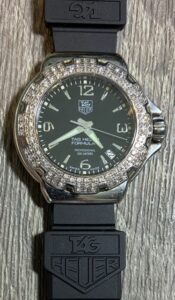
The TAG Heuer WAC1214 Formula 1 Diamond Watch strikes a perfect balance between a high-performance sports watch and a glamorous piece of jewelry. It’s a